Friday, June 23, 2006

Rocks In My Head: Some thoughts on the Matthean view of Peter

Some Protestants, such as D.A. Carson, agree with the Catholic position that it is Peter who is being called the "Rock" in Matthew 16:18. However, they do not agree with Catholics regarding the charisms and authority they claim comes with the office. In other words, the same Protestants do not agree that a papacy was being established here, complete with successors, universal jurisdiction, infallibility, and all the other charisms Catholics claim for him and the office. Yet, I feel that because the "Rock" argument is essential to the Catholic belief in the papacy, if it can be refuted, then we must refute it. Take the "Rock" away from Peter and you take away a major factor in the Roman Catholic argument for the papacy. With that in mind...

It is argued that Jesus spoke Aramaic, thus there would be no gender difference considering Kepha would be employed. This is mere speculation because the Palestinians of His century would've spoken one or more idioms (Aramaic, Hebrew, and/or Greek) so there is no way of knowing for sure which language Jesus used when He stated the words in Matthew 16:18. It is further argued that Matthew may have been originally written in Aramaic. However, this assumes much considering there are no Aramaic Matthean manuscripts in existence and, until one surfaces (we won't hold our breath), there is no such thing. Yet, what speaks volumes to me is that the Greek Matthean manuscripts we do possess, do not employ any word which would give substance to the Catholic claims for the Aramaic. Why didn't Matthew write "Thou art Petra and upon this Petra I will build my church"? It would be silly to give Peter a feminine name. Is it because Peter was a "dude"? Then why wouldn't Christ say "Thou art Petros and upon this Petros I will build my church"? Whether it be a small stone or a rock, the message wouldn't be lost and Christ would be saying that Peter is who the church is built on. But there is nothing to lead that way. Instead, this divinely inspired Apostle differentiates between the feminine and the masculine form. No, there is nothing in the passage that would lead us to believe that Peter is the Rock. All in all, what this means to me is that Matthean support for Peter as the Rock is basically nonexistent.

Wednesday, June 14, 2006

Meanwhile, over at Jim's blog...

Jim Swan posted my "Did Jerome Change His Mind on the Apocrypha ?" over at his blog found here. It is a refutal of the Catholic apologists who attempt to recreate Jerome's stance on the Apocryphal books. Jerome is considered a Doctor of the Catholic Church. Throughout history, only a few have been given this title, so to have someone of his stature disagree with the added books of the LXX (Septuagint) is rather embarrassing to some. Give it a read. Hopefully, by God's grace, I did a half-decent job :-)

Sunday, May 28, 2006

Are the "Spirits in Prison" Those in Purgatory?

A Roman Catholic asks:

Anyway, please educate me CM, what does it mean when St. Peter wrote that ... Christ preached to the Spirits in prison? For sure our Lord cannot be in Hell, and not in Heaven for why would the Spirits still be in prison? Wouldn't this correspond to a middle way?

My response:

Even though I have answered this in other threads, I would be more than happy to oblige. Let’s look at the verse:

1 Peter 3:18-20For Christ also once suffered for sins, the just for the unjust, that He might bring us to God, indeed being put to death in the flesh, but made alive in the Spirit; in which also He went and preached to the spirits in prison, to disobeying ones, when once the long-suffering of God waited in the days of Noah, while the ark was being prepared (in which a few, that is, eight souls were saved through water).

In context, immediately one notices that the verses aren’t, in the least, purgatorial and speaks in specifics. Who are these “spirits in prison”? They are the antediluvians, those who disobeyed during the days of Noah as the verse plainly states. There is nothing in the verse that gives credence to the concept of purgatory because it states nothing resembling a purgatory. Now, it states that Christ was put to death, but His “spirit” was made alive. IOW, this event happened in between His crucifixion and resurrection when His spirit descended into Sheol (Hades) and preached the will of God to the spirits there. In Luke 16:20-31, Jesus gives insight into the places of the dead by telling us his story of Lazarus and the Rich Man (Dives, if you believe the traditional name of this man). Both went to Sheol (Hades in the Greek), but to two distinct places within Sheol. Lazarus went to what is known as Abraham’s Bosom or “paradise” (Luke 23:43), the place of the OT saints, while Dives went into the hell of the damned. There was a “gulf” between these places where one couldn’t cross to the other side (Luke 16:26). Since Christ is the only way to the Father (John 14:6) the Old Testament saints could not enter the Father’s kingdom until He came, thus they remained in Sheol in a place of “comfort” (Luke 16:25) which was called Abraham’s Bosom (Rome calls this “limbus patrum” or “limbo of the fathers”). When Christ died, He went into Abraham’s Bosom and proclaimed the gospel to the souls there. Just as in Luke 16, those within the hell of the damned could hear Christ proclaim this gospel to the saints in Abraham’s Bosom, and this gospel brought freedom to the saints in the Bosom, but to those in the hell of the damned, it condemns them all the more. Thus, it can be said that Christ preached to the “spirits in prison.” Yet, as you can plainly see, none of these “spirits” were in a purgatory, but the righteous were within Abraham’s Bosom and the wicked were within the hell of the damned. The “spirits” in Abraham’s Bosom were released a few days after the Resurrection where they appeared to many (Matthew 27:52-53).

CM

Saturday, April 08, 2006

Fragments of Deceit: The Gospel of Judas

Thursday, ABC provided just another of their perennial anti-Christian fare by presenting a special on the Gospel of Judas, a document purportedly written by Judas, where it is claimed that Christ asked Judas to betray Him. That it was all a part of "the plan." ABC presented this as if it were breaking news, but nothing could be further from the truth. It is disappointing to see ABC continue in this digression, attempting to bring skepticism to the very heart of Christianity while ignoring everyone else. Lord knows what would happen if they attempted to do the same with other central religious figures (Buddha, Mohammed, etc). Yet, James White wrote an excellent article exposing the biased nature of their reporting and shedding light on the document itself, which is a Gnostic work, older then the manuscript found, and one known to the early Christians, in particular, Irenaeus, an early church father, having written of it in the mid to late 2nd century and calling it a work of fiction. Anyway, you can read it here. Enjoy!

Tuesday, April 04, 2006

Btw...

I would encourage everyone to read Jim Swan's blog. Presently, he has a pretty interesting series on Catholic misperceptions of Luther and Calvin. I think everyone will find it very informative and helpful when addressing the misrepresentations found on many forums throughout the WWW. I've been exposed to them as I know many others have. Take the time to read them and see a real Luther-aficionado at work.

Augustine speaks...

Sorry for not posting the last couple of weeks, but the arm has been very sore and I thought I'd lay off the keyboard for awhile. However, I was inspired after reading this and thought I'd post it:

As regards our writings, which are not a rule of faith or practice, but only a help to edification, we may suppose that they contain some things falling short of the truth in obscure and recondite matters, and that these mistakes may or may not be corrected in subsequent treatises. For we are of those of whom the apostle says: "And if ye be otherwise minded, God shall reveal even this unto you." Such writings are read with the right of judgment, and without any obligation to believe. In order to leave room for such profitable discussions of difficult questions, there is a distinct boundary line separating all productions subsequent to apostolic times from the authoritative canonical books of the Old and New Testaments. The authority of these books has come down to us from the apostles through the successions of bishops and the extension of the Church, and, from a position of lofty supremacy, claims the submission of every faithful and pious mind. If we are perplexed by an apparent contradiction in Scripture, it is not allowable to say, The author of this book is mistaken; but either the manuscript is faulty, or the translation is wrong, or you have not understood. In the innumerable books that have been written latterly we may sometimes find the same truth as in Scripture, but there is not the same authority. Scripture has a sacredness peculiar to itself. In other books the reader may form his own opinion, and perhaps, from not understanding the writer, may differ from him, and may pronounce in favor of what pleases him, or against what he dislikes. In such cases, a man is at liberty to withhold his belief, unless there is some clear demonstration or some canonical authority to show that the doctrine or statement either must or may be true. But in consequence of the distinctive peculiarity of the sacred writings, we are bound to receive as true whatever the canon shows to have been said by even one prophet, or apostle, or evangelist. Otherwise, not a single page will be left for tim guidance of human fallibility, if contempt for the wholesome authority of the canonical books either puts an end to that authority altogether, or involves it in hopeless confusion (Reply to Faustus the Manicheaen, XI, V).

Augustine is clear that the Scriptures are sufficient in determining doctrine and that one can exercise private judgment in determining its interpretation. He is careful to point out that truth is weighed by the proper exegesis of Scripture, but he recognizes even his own fallibilities and points out that his writings are just a means to edify. Compare this to those who claim that Scripture is subservient to the Church's "infallible" interpretation and not meant for anyone's private judgment.

Just thought you'd like to know...

Sunday, March 12, 2006

On the Canon: Part 1...

Seems like I've spent a lot of time dealing with canon issues lately. I don't know why, but it seems that assumptions rule the day when it comes to the issue of the Jews, the canon, their alleged exclusion of the deuterocanonical books, books which were allegedly held as Scripture by the Alexandrian Jews, the issue of when they closed the canon, and so on. No one denies that, in largely Hellenistic times, the Greek LXX (Septuagint) would be the translation of choice, especially for a gospel that was being preached to the Greeks. Allegedly, the Jews of Alexandria included the extra books, those which comprise the Apocrypha (deuterocanonicals if you prefer), within their text, but inclusion into a set of books doesn't necessarily mean that these were held to be divine and inspired. Usually, it is argued, these book were part and parcel of their canon, but it seems they disappeared at Jamnia, some say as a polemic against the Christians.

When the OT Scriptures were translated into the Greek language, it was done by a group of Jewish elders commonly known as "the 70" (by some accounts there were as many as 72), at the request of Ptolemy II. Although some credit them to have translated the entirety of the Old Testament and the other books, it was solely the Pentateuch (the five books of Moses) which they translated. There is a legend that these elders translated the books independently of one another, when they compared the translations, they were found to be completely uniform, word for word. I've heard this story from many of the Catholics I've dialogued with, but it is stated under the assumption that the "70" translated the entire Alexandrian text. As time progressed, other books were translated by various translators. The earliest codex of the LXX (Vaticanus) is dated early 4th century and was transcribed by Christians, not Jews. It is obvious that the Apostles quoted from the Greek LXX, but again, there is no real evidence that the text they used included the extra books (from here on referred to as the LXX+). I'm sure they were familiar with the books, but to equate familiarity with canonical acceptance would be assumption at its purest. Paul wasn't hesitant to use pagan sources if they conveyed a certain truth, as he did in Acts 17:28 with the Stoic philosopher Aratus, in 1 Corinthians 15:32 with Menander, and in Titus 1:12 with the poet Epimenides. These citations, by virtue of their inclusion in Scripture, become Scripture. However, their inclusion into Scripture doesn't make the entirety of their writings Scripture as a result.

Then we get to the issue of books being "tossed out" at the so-called council of Jamnia, but this was not a council in the sense of one that comes together to vote, neither did they toss out books. Talmudic sources recorded the debates over canonical books, such as Esther, Ecclesiastes, and others, but there are no records indicating that deuterocanonical books were ever debated, much less "tossed out." Roger Beckwith, in his book The Old Testament Canon of the New Testament Church, mentions the debates over canonical books and makes an excellent point. He states that if history records the debates over books which remained in the canon, how much more it would have recorded debates over books which were taken out. Yet, there are no such records to indicate that this was ever the case. Instead, from Catholics, we find them associating the Jewish absence of recognition towards the Apocryphal books with the debates surrounding the few "canonical" books. They relate the two regardless of the fact that there were no issues regarding the Apocrypha. The canonical books debated remain part and parcel of each of our canons to this very day.

For some funny reason, it seems that the Jews just don't factor in anymore when it comes to the Old Testament canon. At least that's how it seems when speaking to the Catholic apologist. They boldly claim that Protestants are following a Jewish decision rather then a Christian one. Yet, Paul states in Romans 3:2 that the Jews were "...entrusted with the oracles of God." Paul wouldn't have said it unless he was familiar with the books they were familiar with. It would seem that the Jews understood what comprised the divine words of God and Paul gives credence to this. On another note, Jesus seems to imply the extent of the Jewish canon with His words in Luke 11:51. If we go with the Jewish chronological order of the books, this would place Genesis, where Abel's murder is recorded, as the first book and 2 Chronicles, where Zechariah is killed, as the last book of the canon. One particular Catholic argued that, for this to work, the Zechariah spoken of here must be the "son of Barachiah" according to its parallel verse in Matthew 23:35, thus this would be a reference to Zechariah 1:1 and not 2 Chronicles 24:20-22, but this doesn't allow for Christ's words considering the Zechariah of Zechariah 1:1 didn't die in the manner Christ describes. So, why does Matthew associate the "son of Barachiah" with Zechariah? It could be that the Zechariah of 2 Chronicles 24:20-22 had a common ancestor who had the name "Barachiah." It wasn't uncommon for the Jews to use the term "son of" with the name of a well-known ancestor, rather then with the paternal. A good example of this would be Jesus, He was known as the "son of Joseph" (Luke 3:23; John 1:45) but He was also known as the "son of David" (Matthew 12:23; Mark 10:47).

To be continued...

Saturday, March 11, 2006

Wes King...


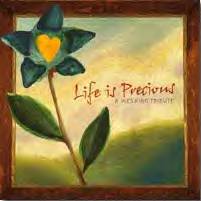
Many of you are familiar with Christian artist Wes King who was diagnosed with lymphoma. He recently received his last chemo treatment, blood count is up, and is doing a lot better. His treatments have really left him and his family financially unable to keep up, thus the Life is Precious: A Wes King Tribute CD was born. It will be released Tuesday, March 14th, but you can preorder and get 3 bonus tracks. There are various artists involved, amongst the most notable Phil Keaggy, Cheri Keaggy, and Derek Webb (who most of us Reformed folks know), former founding member of the band Caedmon's Call. Wes and his family needs your prayers in these trying times, but please, throw a little works into the mix and buy the CD. Click the link with the album name above for the link. Peace.

"Life is precious, life is sweet
Like the earth beneath my feet
Though I know I'm passing through
I know I belong to You
Life is precious, life is sweet
And this truth makes it complete
Knowing Jesus died for me
Life is precious
Life is precious, life is sweet"
-------Wes King-------

Monday, March 06, 2006

OUCH!!!

Had a bit of a spill yesterday. I was watching a rerun of "Leave It To Beaver" and, during the commercial, I ran downstairs to grab a slice of Entenmann's Banana Cake (love the stuff). There was a wet spot on the floor that I didn't see and "WHAM!!" I took flight and wound up on my shoulder under the table. Me, being the bozo that I am, didn't bother to go to the hospital and, here I am, almost certain that my shoulder's dislocated. I had a heckuva time trying to sleep last night and I'm popping Tylenol's every few hours. Although I can move everything under the elbow (I can even type), I can't raise my arms past a few inches. Well, I have committed that I will go to the hospital if there is no improvement by tomorrow, but as you've probably assumed, I hate hospitals. Stay tuned...

Saturday, March 04, 2006

A Private Man


The bummer about being a novice at this is that I have to post my picture on my blog in order to use it on my profile. Well, being the private person that I am, I really hate the thought of posting my pic. It just unhinges me that I would have to do this when I want my rugged, handsome features to remain incognito. So, realizing that this really sucks, here I am in all my glory. Ladies, please control yourselves. I'm married with children.

A doctrine that needs a little "purgation" (heh..heh) Part 1

Good ol' Martin Luther really had his work cut out for him. I mean trying to dialogue with a Church about things you just don't dialogue about. The poor guy just had something to say, but alas, poor Martin was running with the wind and stirred Christians into understanding what we had become.

One of the springboards of the Reformation was the issue of indulgences and purgatory. I think I'll give it a tackle as soon as a I get a chance.

Gee...this blogging thing is easier than I thought. Makes me wonder what would've happen if good ol' Martin were here today, blogging his 95 Thesis here on the WWW.

Peace,
CM
 
Who links to my website?